Intent
At Larwood School, our computing curriculum is designed to equip pupils with the knowledge, skills and confidence to thrive in an increasingly digital world. Using the Purple Mash scheme as a foundation, we provide a structured approach that develops pupils’ understanding of technology while encouraging creativity, problem solving and independence.
The curriculum is built around the three key areas of computing:
- Computer Science – developing computational thinking and programming skills
- Information Technology – using digital tools to create, organise and present information
- Digital Literacy – understanding how to use technology safely, responsibly and respectfully
Computing is taught as a discrete subject but also supports learning across the wider curriculum, including mathematics, science, history and geography. Through these links, pupils develop an understanding of how technology can be used to explore ideas, solve problems and communicate effectively.
By the time pupils leave Larwood School, they will understand how to use technology safely, know how to respond to online concerns and recognise the importance of responsible digital behaviour.
Implementation
Computing is delivered through the Purple Mash scheme of work, which provides structured lessons aligned with the National Curriculum for Key Stages 1 and 2. Learning is carefully sequenced to ensure pupils build knowledge and skills progressively throughout their time at school.
In computer science, pupils develop programming skills through practical coding activities. They learn to create, test and debug programs, predict outcomes and refine their work. Over time, pupils build confidence in using logical thinking to solve problems and create simple digital projects such as games and interactive programs.
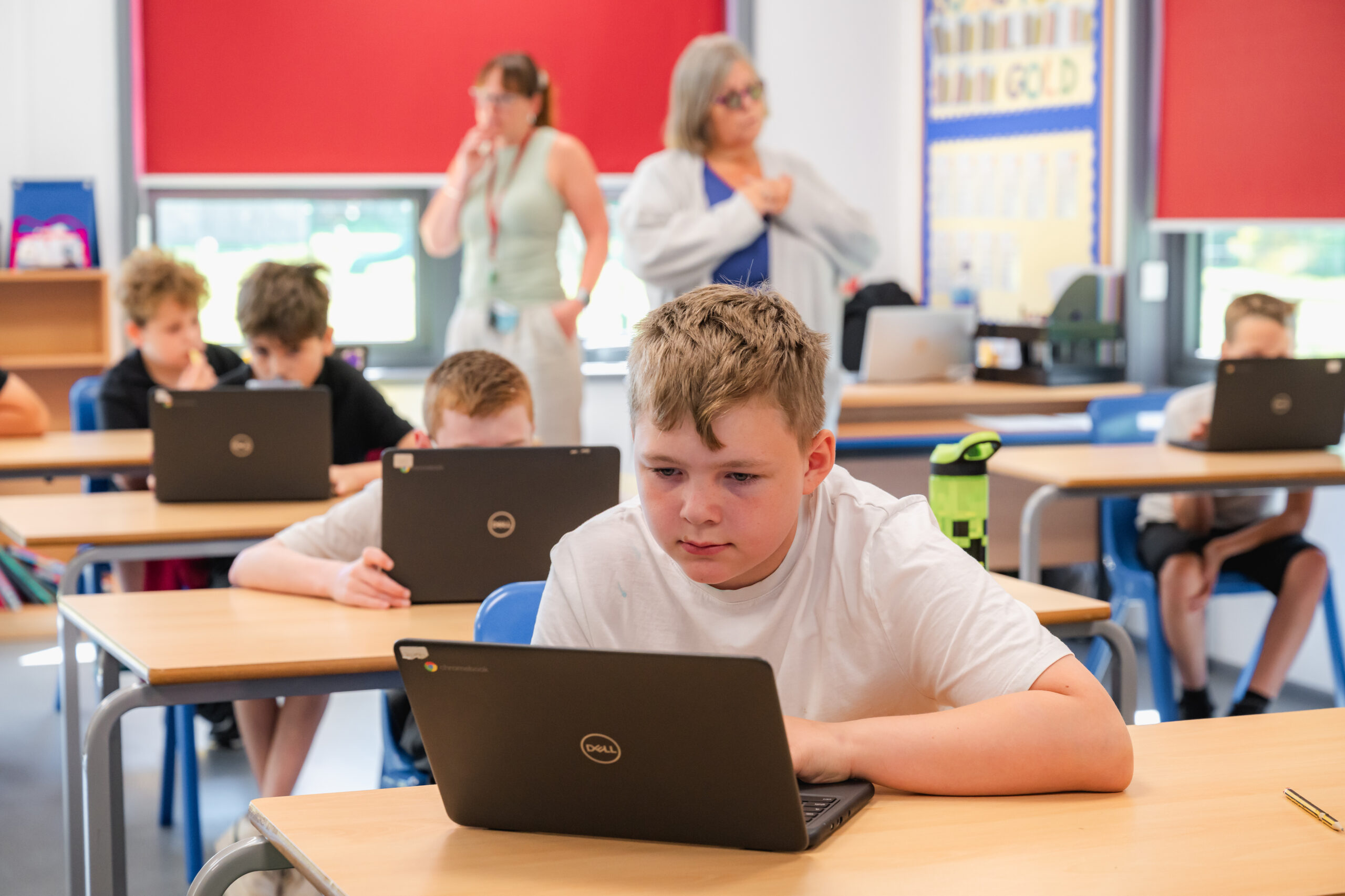
In information technology, pupils learn to use a range of digital tools to create and manage content. Using Chromebooks and a variety of software applications, pupils produce digital work including documents, images, presentations, animations, audio and video projects.
Digital literacy and online safety are embedded throughout the curriculum. Pupils are taught how to communicate responsibly online, protect personal information and recognise potential online risks. This learning is reinforced through dedicated e-safety activities and links with PSHE.
Lessons are adapted where needed to support individual learning needs, ensuring all pupils can access and succeed within the computing curriculum.

Impact
Through our computing curriculum, pupils develop the skills and understanding needed to use technology confidently and responsibly. They become capable users of digital tools and begin to understand how technology works and how it can be used creatively.
By the time pupils leave Larwood School they will:
- Demonstrate increasing confidence in using technology
- Understand basic programming and computational thinking
- Create a range of digital content using different software tools
- Use technology safely, responsibly and respectfully
Impact is measured through:
- Review of pupils’ digital work and projects
- Discussions with pupils about their learning and vocabulary
- Assessment against National Curriculum expectations
- Monitoring progression across year groups
This ensures pupils enjoy computing, make strong progress and leave school as confident and responsible digital citizens.